Brain fitness companion for seniors

A brain fitness companion for seniors, with cognition and prefrontal measurement built in.

It keeps seniors company and measures cognition and prefrontal activity during daily interaction, so families and care workers can see change early and step in.

  • Dudu on iPad
  • Uedu Brain headband
  • Garmin watch
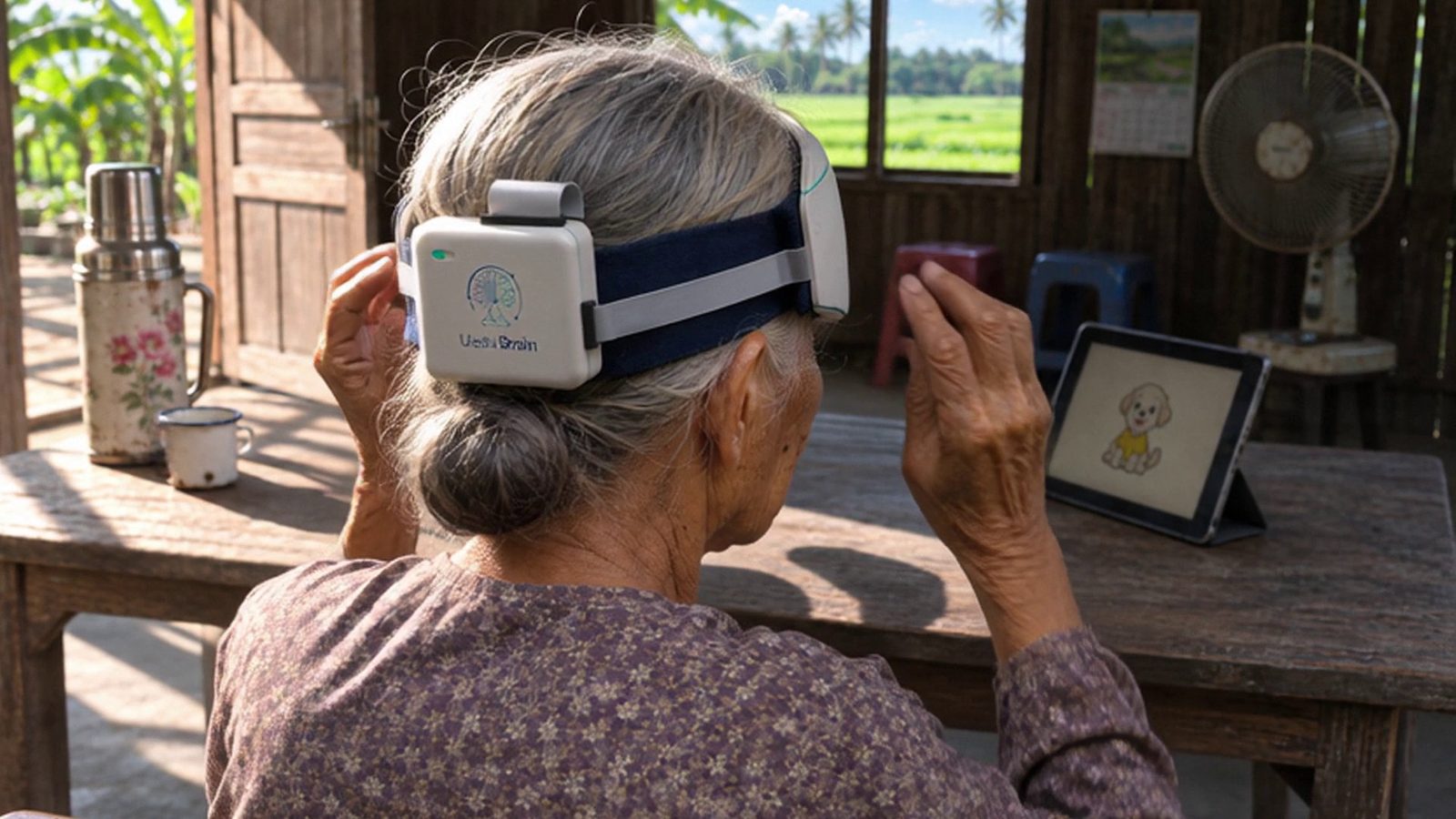
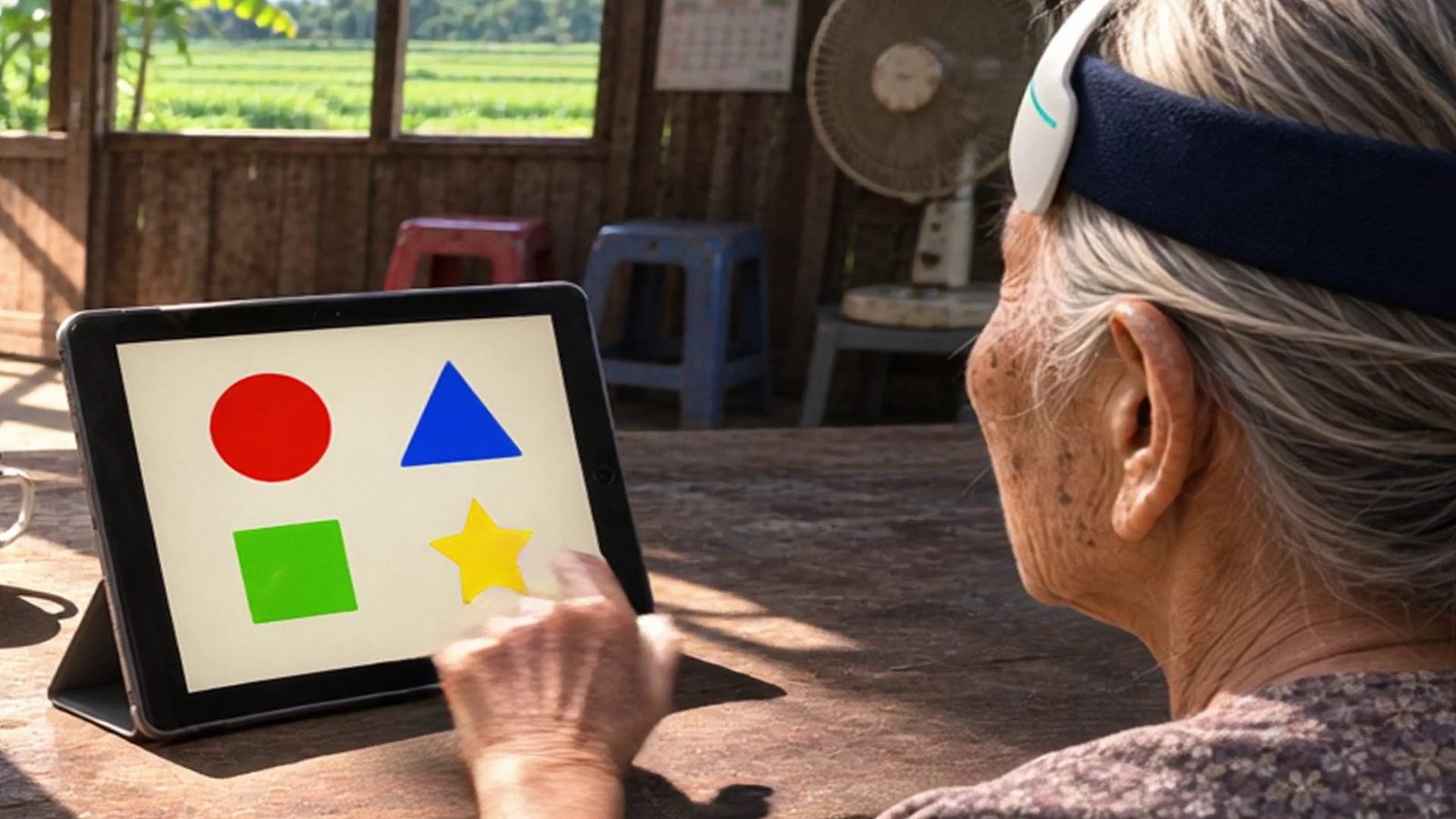
An older woman putting on the Uedu Brain headband at her table, with Dudu on the iPad beside her
Putting on the headband, with Dudu on the iPad. Concept image.
20.06%
of Taiwan aged 65+ at the end of 2025
23.3%
of seniors in Taiwan lived alone in 2023
5.0 ms
heartbeat agreement with Polar H10
23
cognitive tests that play like games
US$650
Basic headband components

The challenge

Ageing is gradual and easy to miss.

Super-aged in 7 years

Taiwan crossed 20% aged 65+ in 2025; the region is following.

Changes go unseen

Sleep, stress, attention and memory shift quietly for months.

Alone, and far from care

Many seniors live alone, and rural seniors live hours from a hospital.

Brain sensing stays in labs

Portable research fNIRS systems are estimated at tens of thousands of US dollars or more.

An older man with a cane walking along a hillside village path
Illustrative image.

The solution

A companion, with our platform and sensors behind it.

Dudu, the companion

Talks, reminds and plays brain games with the senior every day, and guides the headband on.

Behind the companion

Uedu platform

One timeline for each person, with AI in plain language and consent control

Database

Each person's record of body, brain and cognition, built up over months

Physiological sensors

Our own fNIRS and EEG headband, and a Garmin watch

Senior

sees own progress

Family

knows a parent is well

Community worker

notices change, visits sooner

Care team

gets records before a visit

Meet Dudu

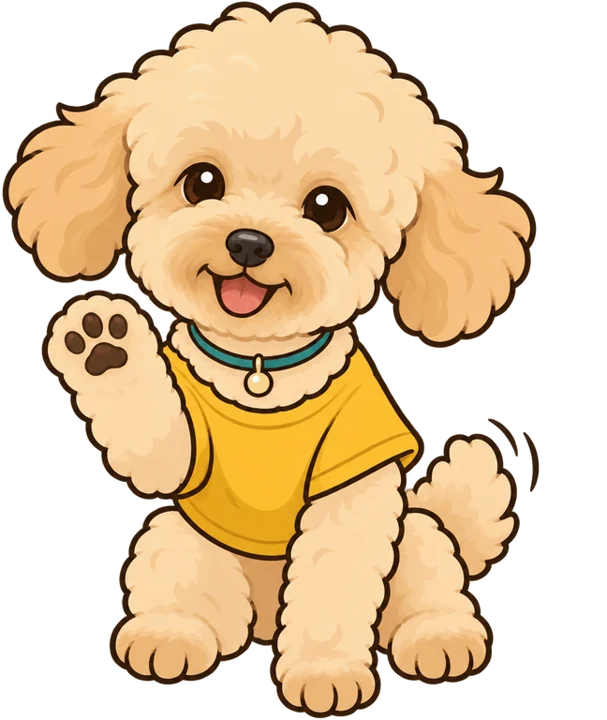
Dudu, the companion in this system.

Dudu is an original character, a small cream-coloured dog, on iPad. Dudu talks with the senior every day, gives the reminders the family has set, shares family photos and old songs, and plays short brain games.

The Uedu Brain headband is a sensing accessory: put on for a brain-game session and taken off afterwards. Dudu reminds the senior to put it on and checks the signal before each game.

Dudu's own expression follows the conversation. Dudu never reads the senior's emotions, and does not diagnose or give medical advice.

Dudu, a small cream-coloured dog character, waving
Dudu on iPad. An original character.
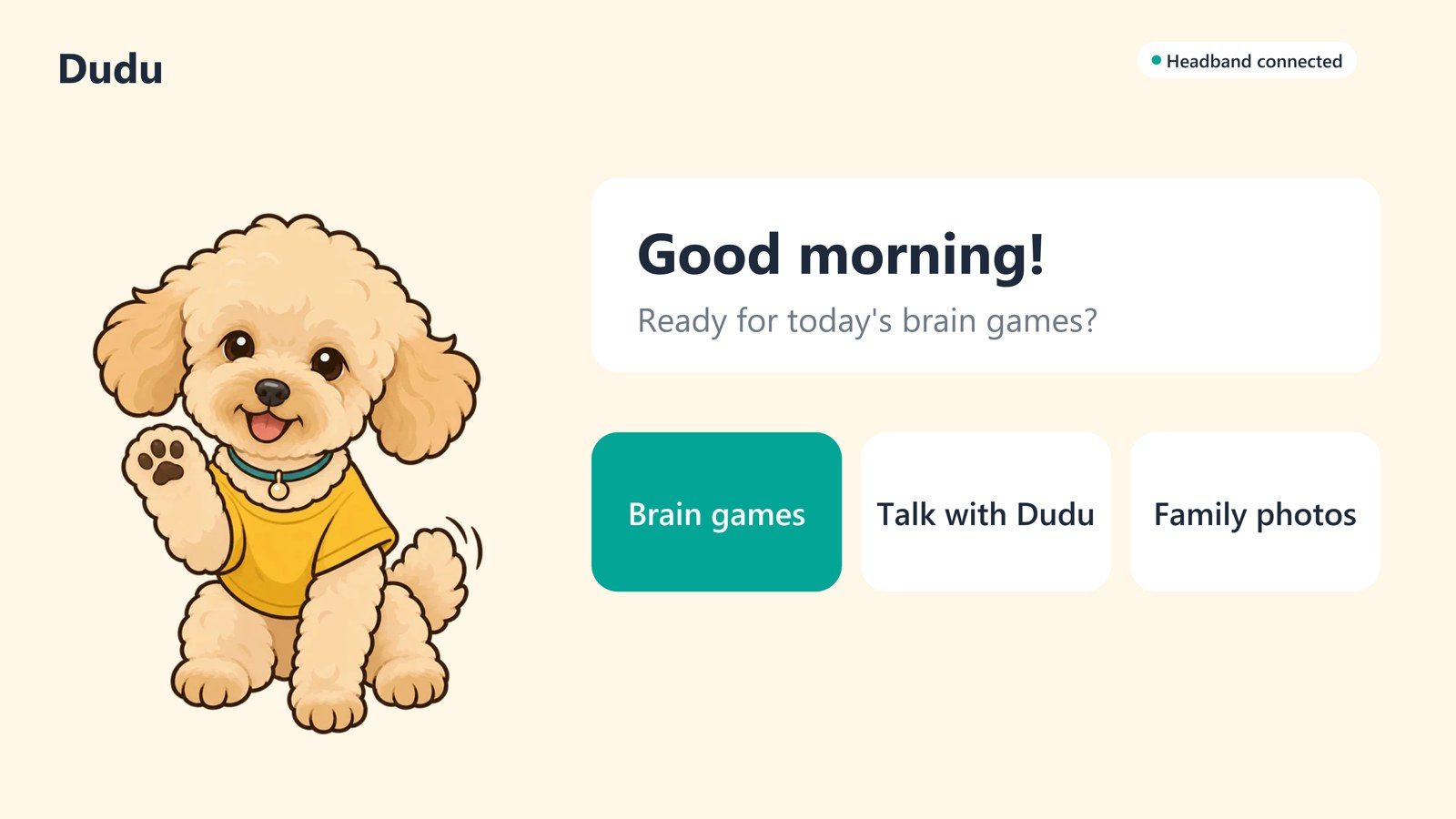
Dudu home screen: Dudu waves and offers brain games, a chat or family photos
Home: talk, play or look at family photos.
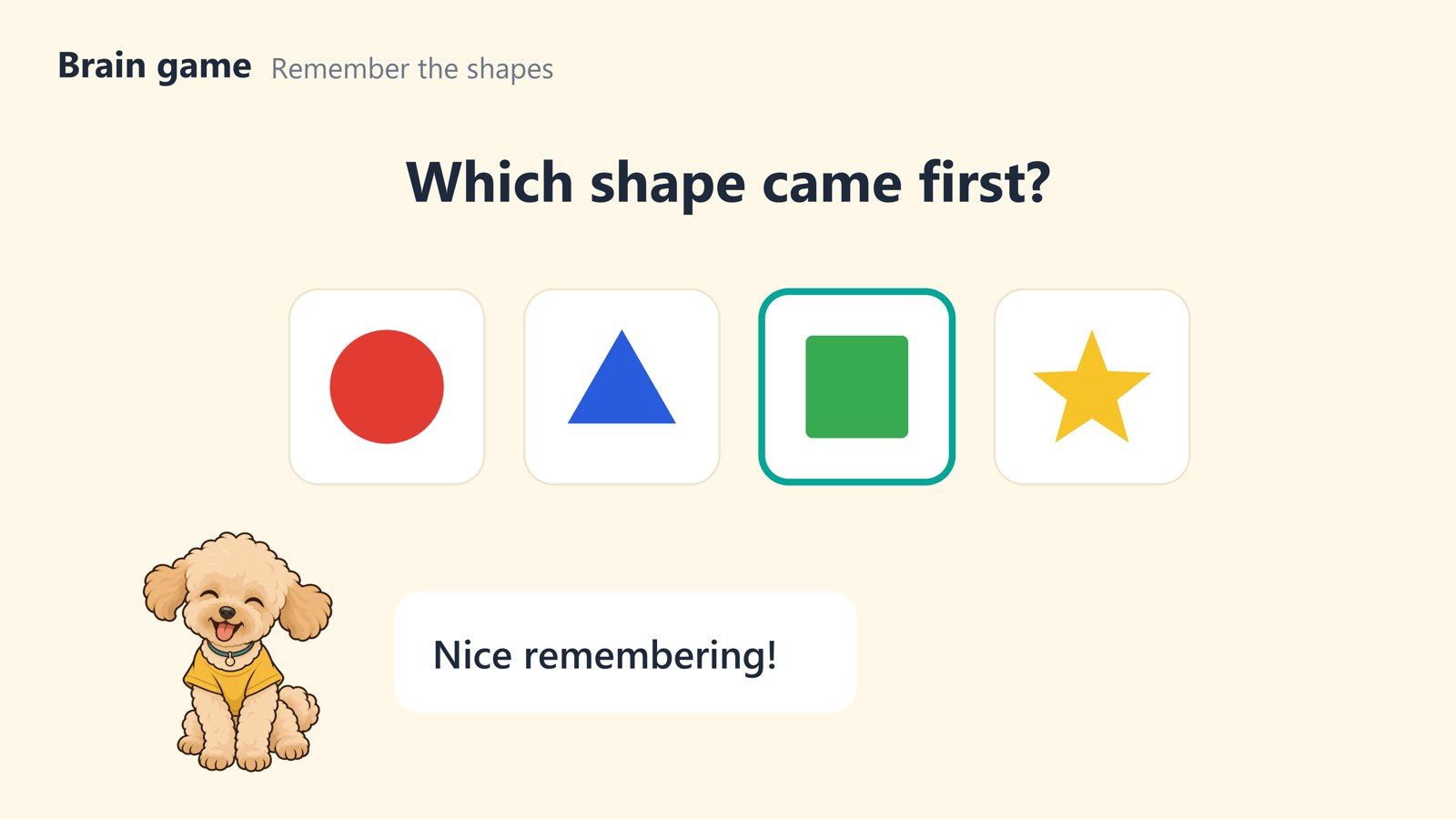
A brain game asking which shape came first, with Dudu cheering
A short brain game, 3 to 6 minutes.
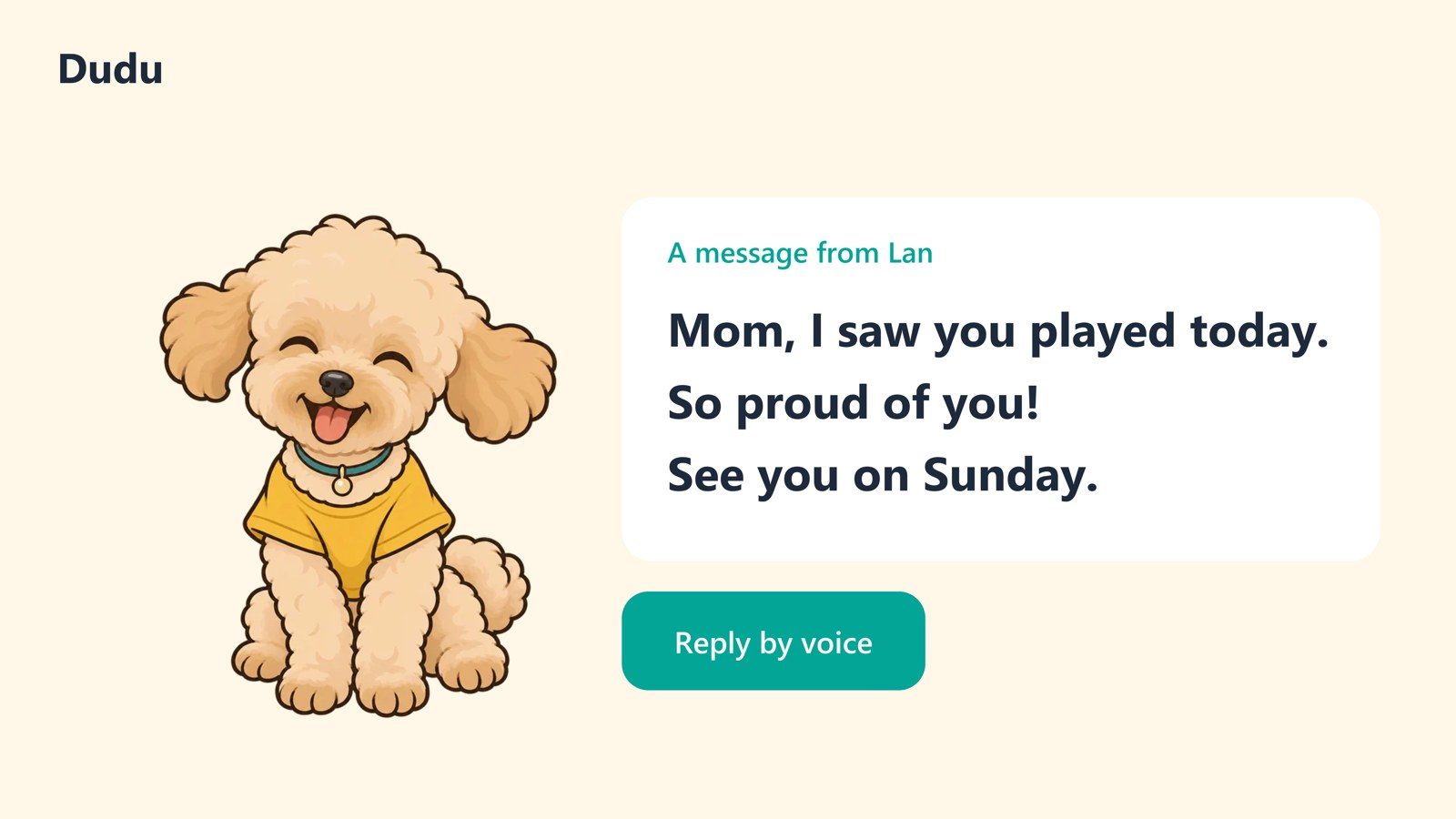
A message from a daughter shown by Dudu, with a button to reply by voice
A message from family, answered by voice.

Illustrative screens.

System architecture

How the pieces connect.

At home

Dudu

Talks, reminds, plays brain games

Uedu Brain headband

fNIRS, EEG and heartbeat during games

Garmin watch

Sleep, steps, heart rate variability

Health numbers

Blood pressure, weight, glucose entered with Dudu

Uedu platform

One timeline

Every game response matched to brain and body signals

Own baseline

Each person compared with their own earlier records

Consent per record

The senior grants and withdraws access

Servers in Taiwan

Voice transcribed on Uedu, then deleted

Care circle

Senior

Decides who sees each record

Family

Sets reminders, shares photos, gets notices

Community worker

Notices change and visits sooner

Care team

Organised records at a visit

How it works

Four steps, all at home.

1 · Every day

Talk with Dudu

Conversation, reminders, stories and photos from family.

2 · Every day

Wear a Garmin watch

Daily HRV, sleep, steps and stress via the Garmin Health API.

3 · At home

Play brain games with the headband

Dudu pairs with the headband by Bluetooth and guides a short session: 8-channel fNIRS, 8-channel EEG and heartbeat intervals.

4 · Uedu

See one timeline

AI explains trends in plain language; care teams get records before a visit.

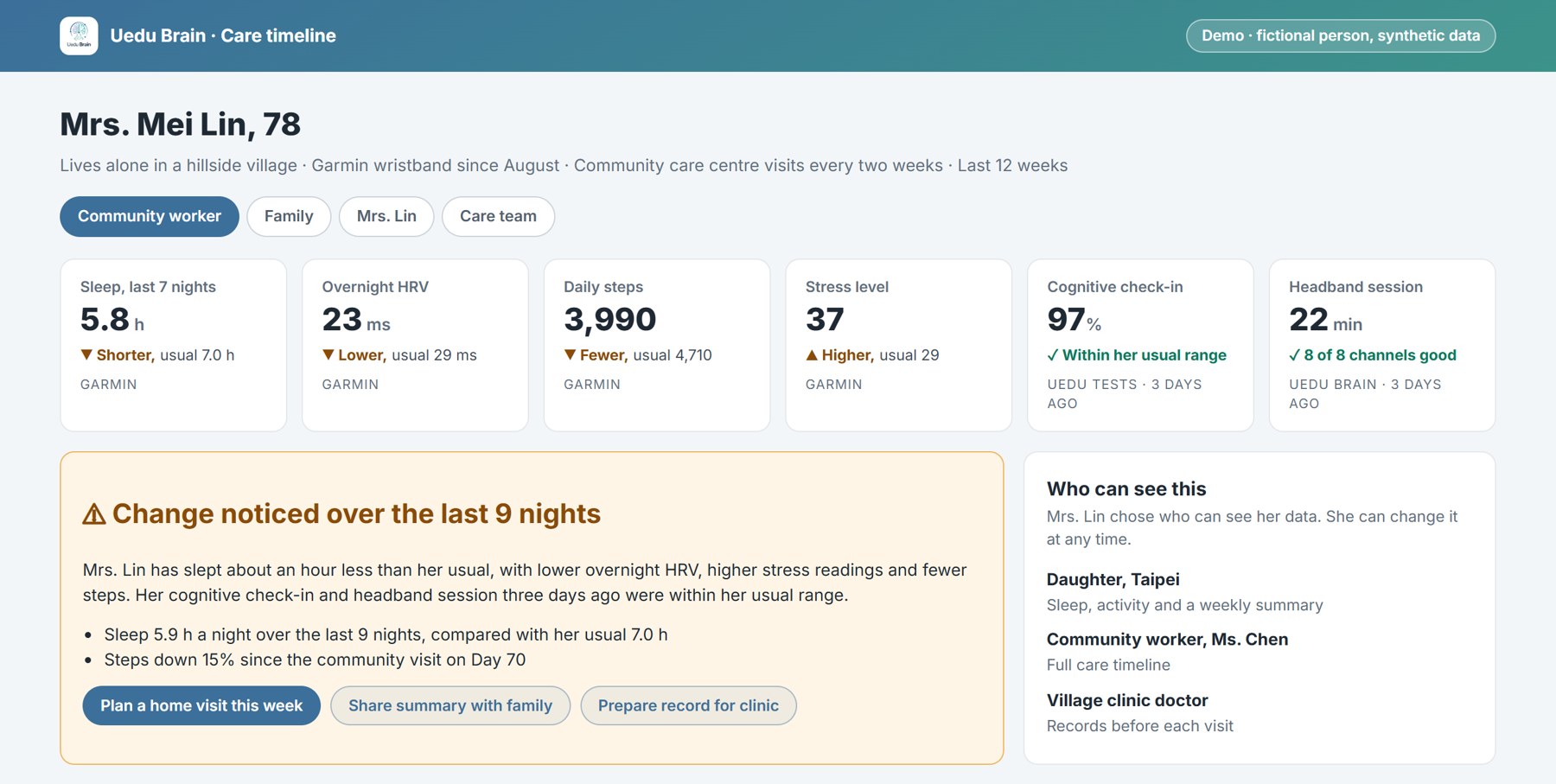
The care timeline
Demo care timeline with Garmin summaries, a change notice and sharing settings
Demo with a fictional person and synthetic data.

Her own usual range

Every measure compared with the person, not a population.

Change noticed

Suggested next steps for family and care workers.

Four views

Senior, family, worker and care team each see what they need.

Open the demo care timeline

What makes it different

Prefrontal signals during everyday interaction.

One timeline

Body, brain and cognition aligned for each person, on one clock.

Our own measurement chain

We design the headband, the board and the platform.

Within reach of a family

US$650 in components for the Basic headband; US$1,000 for Pro with EEG.

Tests that play like games

23 tests, 8 domains, millisecond timing.

Proven wearable integration

Garmin Health Awards 2023 top-three finalist, the only team from Asia.

The hard part

Many teams can build companion products and cognitive tests. We work on usable prefrontal signals during the interaction.

Compared with what exists
CapabilityUedu BrainCompanionsElder-care wearablesResearch fNIRS systems
  Daily company and remindersReminders only
  Everyday physiology at homeVaries
  Cognitive gamesSomeRarelySeparate software
  Brain signals
  One timeline per personSingle signalLab sessions
  Affordable for a family or centreVariesTens of thousands of US$ or more
  Shared with family and care teamFamilyVariesResearchers only

Inside the headband

Designed and built by our team.

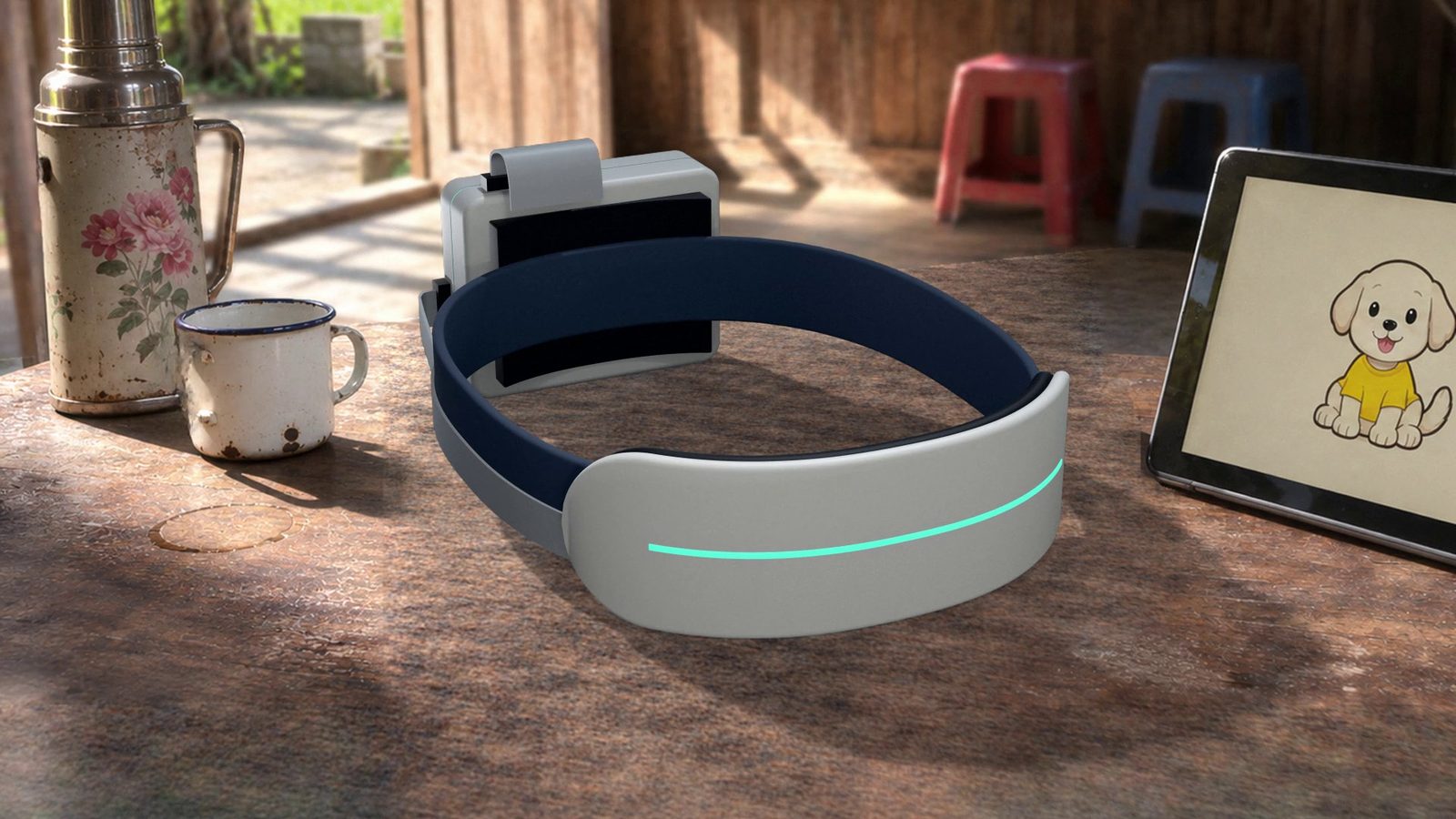
The Uedu Brain headband on a table next to an iPad showing Dudu
The headband, with Dudu on the iPad. Concept image.
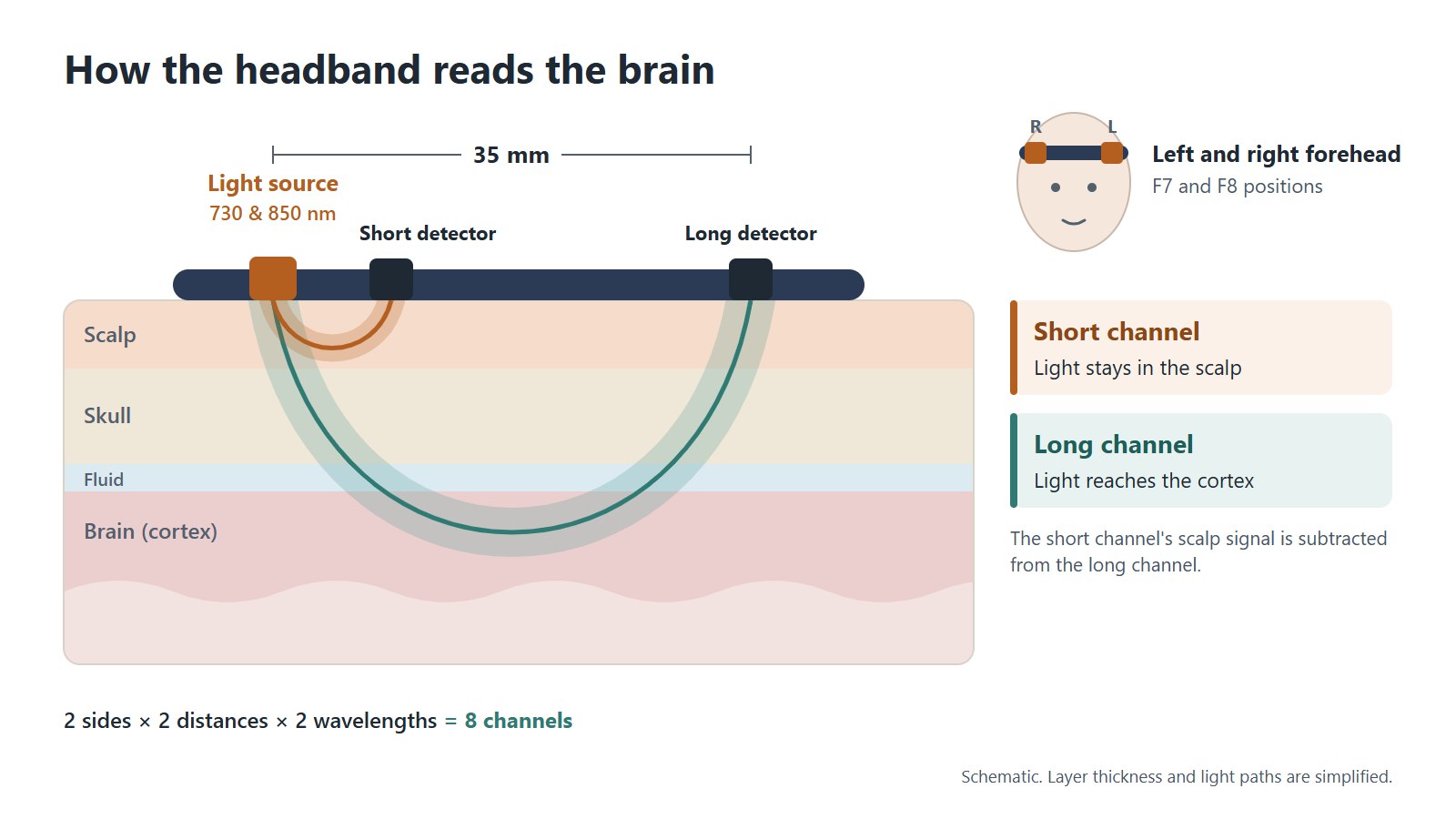
Diagram: light from the source travels through scalp and skull; the short channel stays in the scalp and the 35 mm long channel reaches the cortex. Two sides, two distances and two wavelengths make 8 channels
How the headband reads the brain. Schematic.

8-channel fNIRS

730 and 850 nm

Forehead

Left and right, F7 and F8

35 mm + short

Brain and scalp channels

Heartbeat

5.0 ms vs Polar H10

Up to 60 min

per session, ear-clip ground

Bluetooth + Wi-Fi

Pairs with Dudu, uploads recordings

8-channel EEG

Stacks on the fNIRS board

US$650 / US$1,000

Basic / Pro, in components

Value to community and society

Care that reaches where seniors live.

At home

With family, community centres and local clinics behind them

One companion

Talk, play, wear a light headband

Families can own one

A fraction of research systems

16 languages

Interface ready for the region

Quality of life

Company every day

Someone to talk with, reminders, and favourite stories.

Family stays close

Children in the city see a parent is sleeping and moving well.

Workers visit sooner

Changes in sleep, cognition or brain signals are noticed early.

Doctors come prepared

Organised records before a visit, not memory.

An older woman wearing the headband plays a shape game on an iPad at home
At home. Concept image.
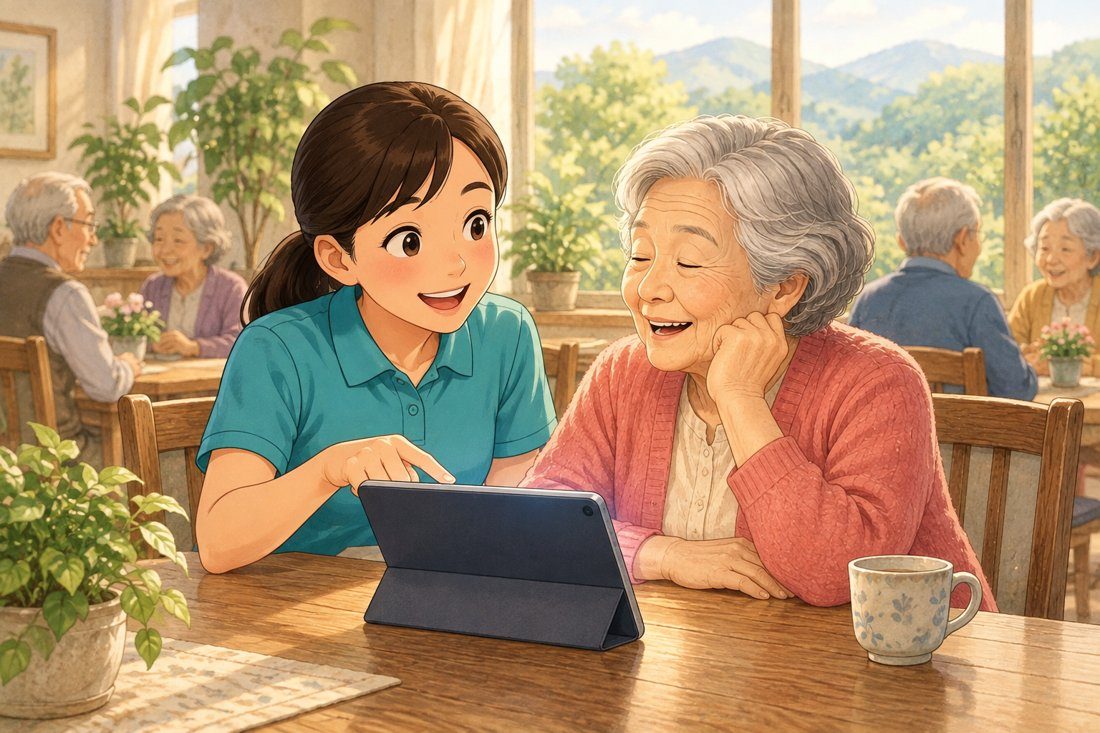
A community worker and an older woman looking at a tablet together at a community centre
Community centre. Illustrative image.
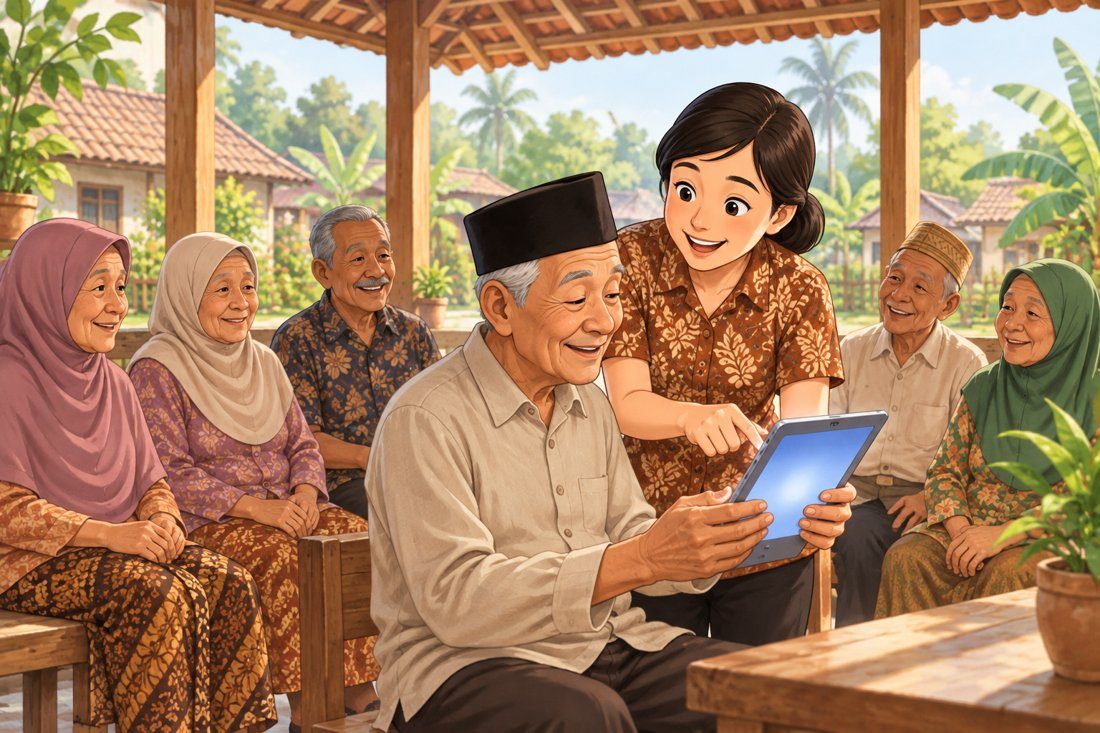
Seniors gathered at a village health post, one using a tablet with a health volunteer
Village health post. Illustrative image.

Quality and trust

Reliable measurement, privacy by design.

Measured signals

5.0 ms vs Polar H10; consistent breath-hold response

Precise timing

Millisecond game timing; no AI calls during tests

Always on

Primary and standby servers; updates without interruption

Consent first

The senior decides who sees their data

What we keep

Heartbeat intervals

Data in Taiwan

Stored on Uedu's own servers

Our journey

From wearable data to brain sensing.

2023

Mindfit

Garmin Health Awards 2023 top-three finalist; 60+ partners entered, the only team from Asia in the final.

2024

Uedu launched

AI-supported platform by Chia-Kai Chang; later Garmin integration and 23 cognitive tests.

2026

Uedu Brain version 1

Our own modular headband: an 8-channel fNIRS module, bench-tested against Polar H10, and a stackable 8-channel EEG module.

2026

Dudu

A companion on iPad that brings conversation, reminders, family media, brain games, health records and the headband into one system.

NEXT

Into homes

A dedicated device for Dudu, and home pilots with families, care providers and device makers.

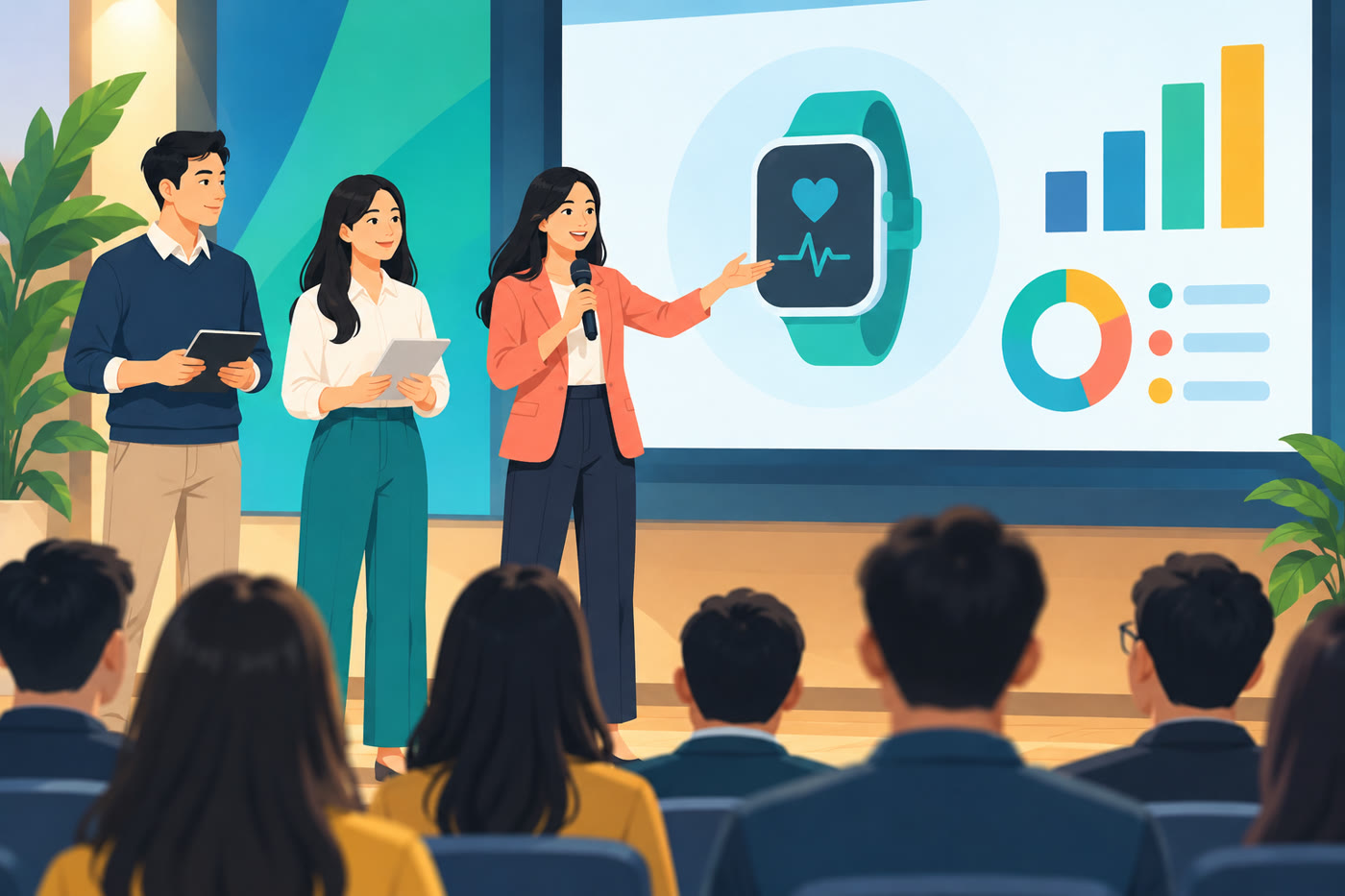
Illustration: three young researchers presenting a wearable health project on stage
Presenting in the final round, Garmin Health Summit 2023, Singapore. Illustrative image.

Team

The people behind Uedu Brain.

Chia-Kai Chang

Founder. Leads Uedu, the care workflow and the research.

K.-H. Li

Co-Founder. Builds and operates the Uedu platform.

C.-T. Lee

Research Assistant. Builds and validates the headband.

Pilot with us

Bring the companion to your community.

We welcome local governments, community care centres, active-ageing learning centres, local clinics and device makers to plan a small pilot with us.

Together we can plan the setting, train community workers, and evaluate how seniors use the tools, whether noticed changes are followed up, and how health habits change over time.

Contact

[email protected]

Chia-Kai Chang, Educational Omics Lab, National Central University

Every senior, wherever they live, understood and well cared for.

A companion at home, with brain measurement once confined to hospital laboratories.